
You don’t need to fear of regeneration. What you should fear of are amateurish myth by armchair experts and “my mechanic friend said” enthusiasts. Let’s figure out how regeneration works in the Saab 9-5. Simply and easily.
A bit of theory from Saab WIS
The ECM calculates the amount of soot in the particle trap. The calculation of soot quantity is primarily based on engine load and speed. The ECM monitors driving style and determines when regeneration is necessary. A car that frequently runs at idle speed and low load will attempt regeneration sooner than one that often drives on highways. Regeneration requires temperatures over +550°C in the particle trap to combust the soot.
To increase the temperature in the particle trap to enable regeneration, there is an extra injection during the exhaust stroke. At about 160° after top dead center, a small amount of fuel is injected into the cylinder. Since this fuel is injected so late, it does not contribute to torque. The exhaust gas temperature does not increase significantly either. The exhaust gases are simply enriched with HC (hydrocarbons), which starts a reaction in the front catalytic converter. The temperature of the gases increases, monitored by the front exhaust temperature sensor. The heated exhaust gases continue into the particle trap where they first reach the rear catalytic converter. Here, the temperature further increases to the minimum 550°C required for regeneration. If not, the soot is not combusted.
Regeneration continues until the ECM calculates that all soot has been combusted. Regeneration can last up to 15 minutes. The driver should not notice any effect on engine performance.
If the car is driven in such a way that regeneration is not possible, the “Check Engine” light will illuminate. Regeneration must now be done manually using the diagnostic tool.
That’s it. However, you do need to know why it might not happen or happens with problems.
The Swedes at Saab managed to complicate the simple filter burn-off system so much that even two Saabs rolling off the assembly line one after another, with identical parameters but a five-minute difference, will perform regeneration differently. Therefore, in WIS (Workshop Information System), from which the above information comes, they twisted and turned to not specify a single exact parameter other than temperature. Additionally, there is no calibration file (and there are even doubts that it ever existed). Everyone else has it, even for the 9-3. For the 9-5, no. But we are the Saab 9-5 Club for a reason—to not only gather information but also share it. So, let’s share.
Factors for successful regeneration
In a fully functional car, an attempt at regeneration will ALWAYS occur as soon as the soot level reaches 80-90%. The ECM module will adjust the ignition timing and begin injecting additional fuel into the cylinders to create hydrocarbons and initiate the burn-off. The process will last 5-15 minutes and may or may not be accompanied by white smoke, attempts to surge forward at traffic lights, and increased engine noise.
The one thing that will ALWAYS be noticeable is the idle RPM around 1000 and around 1800 when driving at 80 km/h.
But there are nuances. For this to happen, the following factors must align:
- No errors. Neither current nor pending. Only a clean ECM. Even a Check Engine light or Intermediate Service message can prevent regeneration.
- At least a quarter tank of diesel. The car calculates fuel for regeneration assuming approximately 20 liters per 100 kilometers during regeneration, regardless of the amount of soot. It simply takes the maximum consumption and maximum time of 15 minutes.
- The calculated amount of soot must be as close as possible to the range of 80-90%. (From extensive experience, closer to 90 than 80.)
- The car must have been driven for at least 5 minutes before the attempt to be as close as possible to operating temperature.
If these four points align, the injection of additional fuel begins, along with growling, white smoke, and attempts to surge forward at traffic lights. From this moment, no actions should be taken.
Do not accelerate “to burn faster”, do not brake in fear of some vibration and never ever turn off the engine while in regen cycle. You need to use the car as usual until the process ends. You can continue driving to work or home. You can drive at 100 km/h or 10 km/h. You can even stop at the nearest parking lot and wait for it to finish.
The main thing is not to turn off the engine. Because in case of interupted Regeneration:
- The system will try to initiate subsequent regeneration during the next startup and a 5-minute drive.
- The system will record an additional 7-10% of soot in memory after unsuccessful regeneration.
- When the soot level reaches 110%, automatic regeneration will no longer be available, and regeneration can only be performed manually at a service center using Tech2.
- Manual, forced regeneration will always reset the soot level to 70, even if performed three times in a row. Always to 70, so upon reaching 80-90, the automatic mode can be launched and recalibrated. If unsuccessful again, everything will repeat in a loop until the worst happens.
- The worst is that all the additional fuel injected into the cylinders during incomplete regeneration will end up in the sump mixed with oil, raising the oil level above the maximum. As we all know, as soon as the oil level is too high, it will be picked up into the combustion chamber at the first opportunity (sharp turns or hilly terrain), and the engine will go into runaway. This can lead to turbocharger failure and, ultimately, either a bill for a new engine or receiving 200 euros for scrapping the car. Don’t experiment on yourself. Believe those owners who have already gone through all these steps—unfortunately, there are many.
What causes failed regenerations? Air.
So, if everything is so simple and easy, why might regeneration fail to start or get interrupted? Well, there’s only one thing — air in the system.
Does regeneration starts, and the car begins jerking, spitting, and bucking? — Wrong air delivery to the combustion chambers. Does the car stall during regeneration? Incorrect air delivery to the combustion chambers. Does regeneration finish, but the car runs unevenly? Incorrect air delivery to the combustion chambers.
Where does the air come from? The first indicator of air in the system is black smoke on the bumper and during acceleration. It appears due to:
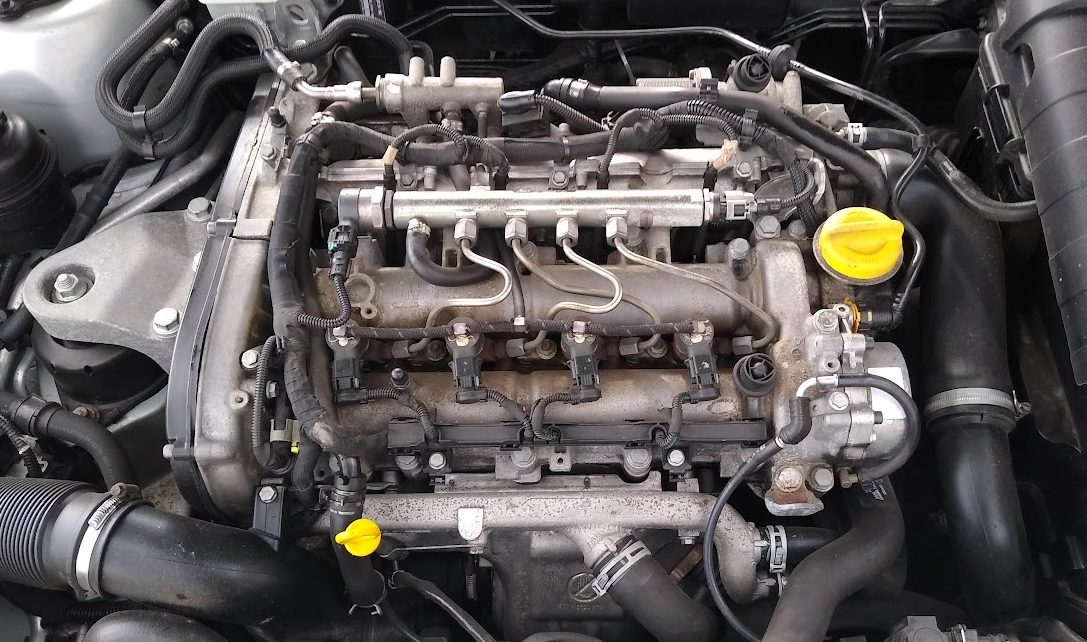
- Swirl Flaps on the intake manifold. They may be stuck in one position, or the linkage may not hold all the flaps, or they may have been removed without subsequent mapping out regeneration itself. Get out of the car, open the bonnet, and look under the fuel rail. In the off position, the flaps should point to 2 o’clock. If the linkage is lying flat, the manifold needs replacement.
- The EGR valve is stuck in the wrong position. Remove, clean, and replace it with a new one at the first opportunity.
- Holes in the intake system. There may be a microcrack in the pipe leading to the throttle. There’s a high probability of the intercooler pipe drying out under the left side of the front bumper.
- Dirty or faulty Mass Airflow Sensor and the Manifold Absolute Pressure Sensor, or a worn-out O-ring on it that seals it in the manifold.
- Incorrectly set idle RPM. Oh, how many parts have been replaced, only to find out that someone, at some point, lowered or raised the RPM while fighting engine mount vibrations, or compensated the Limp Mode while there are holes in the inlet.
If the first points can be checked physically, for the latter, you need to connect Tech2 and read the data. For successful regeneration (and also on a fully functional car), idle RPM should be 850, and airflow in the Mass Airflow Sensor should be 13 grams per second.
If the car stalls during regeneration, you may receive the following error codes: P2279 (air in the intake), P1109 (flap actuator code, but it always lead to air in the system at the end), and P060 (control module fault) which indicates that there is no information because it won’t have time to determine what caused the engine to stop.
And that’s it. There are no more problems with regeneration on the 9-5. In all other cases (for example, a broken temperature sensor wire or excessive air parameters), the system will throw a Check Engine light and log an error well before the SID will show “Particle Filter Full. Service Now.”
Conclusion?
As you can see, none of the advice like “Get on the highway and floor it to 4000 RPM, and then regeneration will start” will help unless the four key points for auto-start align. None of the additives like “pour it in and drive, it will raise the temperature in the system, and then it will somehow start” will work unless all four points align. And overall, none of the “an old lady told me” tips will help. The system is configured exactly as described above.
The issues are all known, and we hope this post will help with regeneration questions.
Of course—if you have something to add, feel free to let us know.
Stay tuned. There’s a lot more interesting stuff ahead. Boost to all!


Comments on This Scary Word “Regeneration”